
Please note: this article has affiliate links for products we use and bought ourselves or received as a specifically requested baby shower gift. I earn a commission if you buy something after clicking one of these links, which helps support this blog.
For when you absolutely, positively can’t get around it (because, let’s face it, it’s a slog) —
My best air travel with infant tips: from my experience with my (then) under one year old.
Here I share insights from my experience traveling with a baby, both on domestic flights and international flights originating in the United States, from when he turned six months old.
I’ve organized my advice based on navigating the major airport activities: booking flights, checking in, getting through security, boarding, and flying. I’ve also shared insights into different gear configurations (such as whether to bring a car seat and stroller through the airport or if it’s better to check them).
Jump around based on what insights you’re looking for:
Flying with a baby: the basics
Let’s start with the basics, then you can choose your own adventure from here in terms of your own specific approach.
As a general note, make sure to give yourself plenty of time to get to the airport, navigate security, and get through boarding. Add at least an hour to your regular routine flying without a baby — and 2+ if it’s your first rodeo.
How old does a baby have to be to fly?
Mayo Clinic shares that infants can safely travel by air as soon as a few weeks after birth, assuming they weren’t born preterm or experiencing other complications. I’m not aware of any age-specific airline policies.
But just because you can travel with babies that young, doesn’t mean you should. Unless you have a solid reason for it. I waited until my baby had his six month shots to travel with him on an airplane but I also had no urgent reason to travel before that.
Do babies fly free?
Many domestic US airlines let babies fly free as a lap child if they’re under two years old — with no need to purchase an extra seat just for them. Note that on some airlines, you’ll have to wear a special lap belt seat belt during take-off and landing. It’s basically a loop belt that weaves into your seat belt.
For short domestic trips, I recommend taking advantage of this lap baby policy. I’m a pretty flexible traveler in general and can personally deal with a squirming baby for a short trip of 2-3 hours.
For longer trips and international flights, you may find it worth the splurge to buy a seat for your baby. We absolutely saw the value in purchasing a seat for baby when flying internationally from the US to Ireland and back.
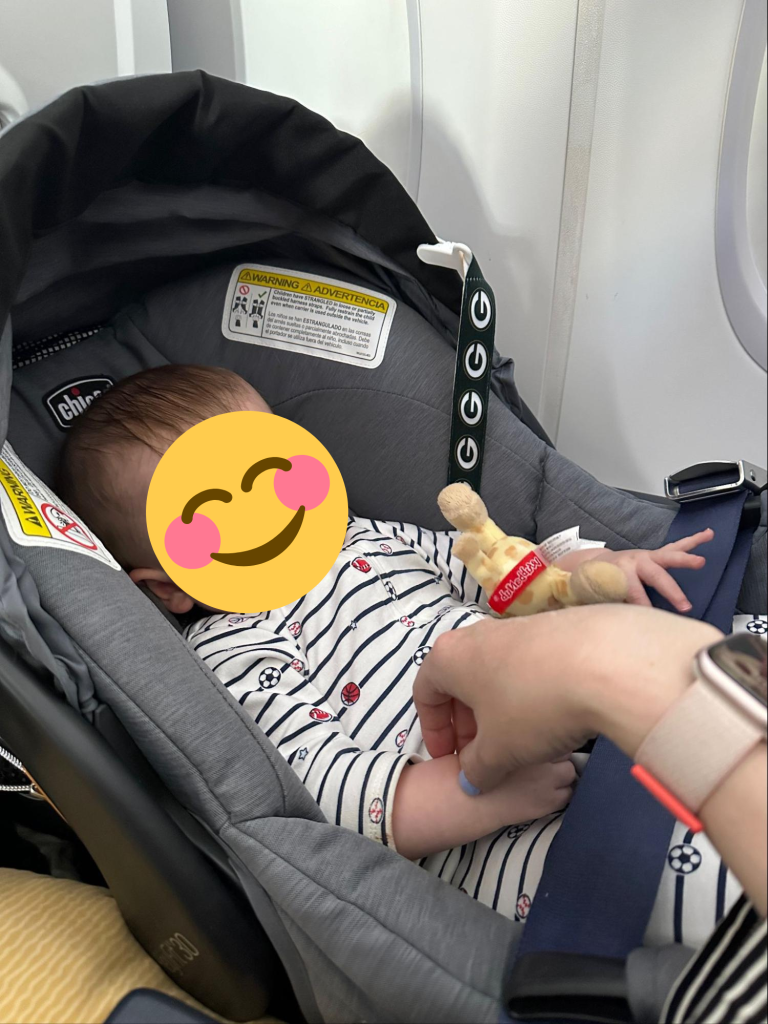
If it doesn’t break the bank, an extra seat is really nice to have a place to put the baby down. He didn’t sleep well while flying internationally for the first time but probably only got the few hours he got by having the car seat to sleep in.
At any rate, having a designated seat for the baby gave us a little bit of a break from the urgent stress of international air travel with infants. It’s a value that’s hard to measure—but priceless comes to mind.
Do I need a lap infant ticket?
Most airlines offer the ability to share your infant’s information and make a booking as a lap child during the ticketing process. But it’s not always straightforward. You may have to finish the process during check-in at the airport and you will certainly need a ticket for them to get through security.
While I have yet to be asked for it, it’s recommended to travel with a copy of your child’s birth certificate as proof of identification and their relation to you. Since we had to get baby a passport for our international travels, we just use that now instead.
Planning flight times and booking tickets
I used to be the type of traveler who would push the limits of baggage allowances on my basic economy flights with low-cost carriers by optimizing backpack packing and wearing special travel clothing with extra pockets. I would choose the red eye option if it saved me money and settle for the worst seats on the plane if they were cheaper.
Now that I have a child, all of that is out the window.
Every flight with my young child is a test of my wits and overall survival skills and I want to make it as comfortable as possible. As such, I now happily pay more for better seats, non-stop options, and flight times that align well with my baby’s wake windows.
For one of our first flights with baby, I splurged (using points) to book us on first class, which resulted in a (mostly) peaceful flight and a delicious meal service that made the travel experience more tolerable.
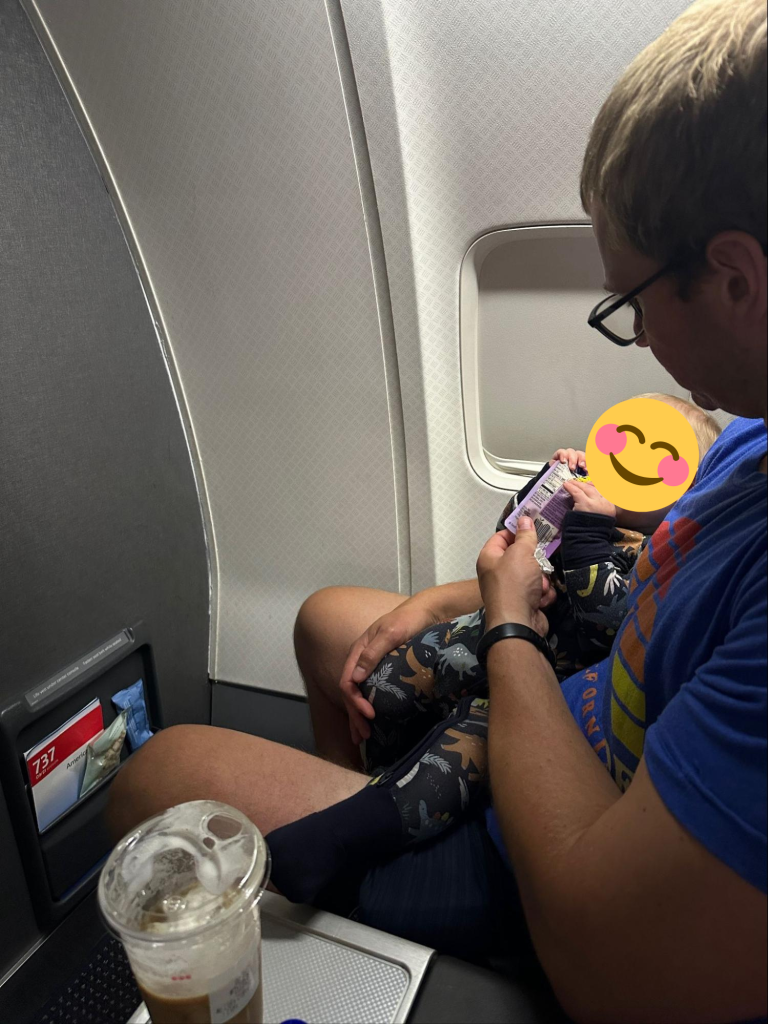
Of course, all of these “upgrades” will certainly rack up expenses, especially for international travel. Such was the case for our first international trip with baby, where I upgraded the basic economy option to include checked bags, a dedicated seat for baby, and a non-stop flight.
With all that being said, flying is not a particularly comfortable thing for anyone, especially families, so even with all the best planning, travel necessitates flexibility. If you really struggle to be flexible, you may want to wait a few years to fly with your child.
Checking baggage and airport security with a baby
Moving through security with a baby is definitely more stressful than traveling on your own.
There are a lot more physical things to juggle on top of normal travel needs: a diaper bag, stroller, and you know, your baby. And they all need to separately make it through the baggage scanners and x-ray machine.
I always advocate investing time and money into things that make your life easier over the long term.
I highly recommend getting TSA Precheck (Global Entry if you travel outside of the United States) to avoid having to take off your shoes or remove large electronics from your baggage. While these things create a minor annoyance when traveling solo, travel requirements outside of using TSA Precheck can cause problems when traveling with an infant.
Baggage allowance
In general, your baggage allowance increases when traveling with a baby. You can typically check or gate check a stroller and/or car seat at no additional cost and carry on extra bags for diapering and feeding (like a breast pump bag).
You should confirm with your airline regarding their specific policies and allowances.
Traveling with breast milk
According to the TSA, milk (baby formula and breast milk) and toddler food including baby pouches are considered medically necessary liquids. In general, traveling with a baby means less strict rules regarding baby food liquids in your carry-on.
I personally haven’t attempted to carry on more than a bottle’s worth of breastmilk, so I can’t speak to the specifics of traveling with a larger stash. Refer to the TSA’s guidelines linked above for details on how much you can carry on and how specifically to package it. Be prepared for the possibility that they will have to test some of the liquid before letting you pass through security.
As my baby grew older and we moved to 100% formula feeding for milk, I appreciated the convenience of having ready formula that I didn’t need to keep refrigerated and could just pour into a bottle and didn’t need to keep refrigerated.
If you do need to keep things cold, I got these freezer packs for postpartum that I’ve now repurposed to pack for traveling with baby.
When my baby was still drinking formula, I always brought powder formula, too. Baby’s Brew has a handy dispenser (currently part of a sold out bundle as of publishing this article) that fits nicely in a diaper bag.
On almost every flight, when I asked a flight attendant for a sealed water bottle (or canned water), they were happy to oblige for the baby’s sake.
My baby is not particular about bottle temperature, but I’d assume that most flight attendants would happily provide hot water if asked. You could also travel with your own portable bottle warmer — I used the Baby’s Brew bottle warmer before realizing it made no difference for my baby.
Air travel with a stroller
I invite you to challenge me but I’m fairly certain that the only way to successfully navigate the airport with a baby is by using a stroller to transport said baby and said infant car seat.
An advantage of traveling with a younger baby is that the combo click-in car seat/stroller situation is the most efficient setup for making moves at the airport.
But as of writing this, our baby has outgrown the convenient click-in infant seat and now uses a car seat that isn’t compatible with the stroller. We use a large carabiner to make the best of the situation in terms of moving around without monopolizing each adult’s luggage moving capacity.
Here’s our full airport baby travel system:
- Graco Chicco modular stroller system: This carrier, car seat, and stroller combo were amazing when my baby was an infant. Now that he’s a toddler, he still fits in the stroller, which is what we bring with when we travel — we don’t have a separate travel stroller. If we did, and money wasn’t an object, I like the Bugaboo Butterfly as a lightweight stroller that fits in the overhead compartment. I’ve seen it in action on airplanes and it’s impressive.
- Large carabiner: This is essential for tethering your travel car seat to your stroller so you can move it effectively through the airport. When we travel, we have to choose an effective way to transport the car seat for a distance because we drive to the airport and park in the airport parking lot.
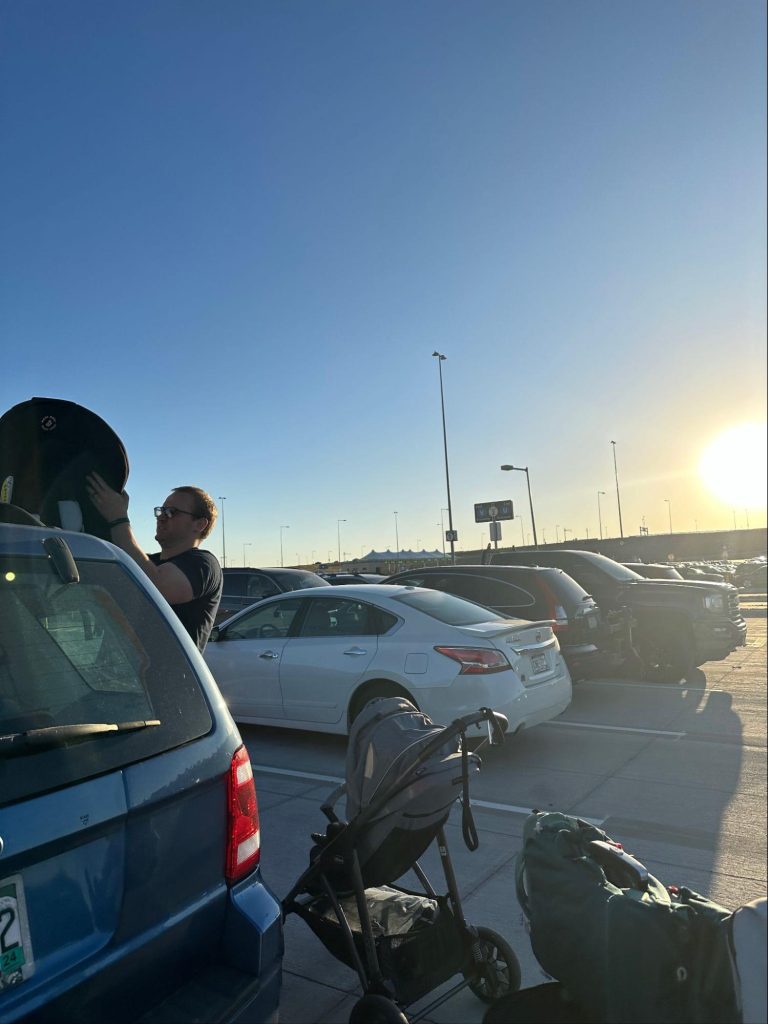
- Infantino baby carrier: A sturdy baby wearing option that adjusts to a growing baby. More on this below in the next section.
- Maxi Cosi Romi convertible car seat: This car seat is used pretty exclusively for travel but it also works as a spare car seat so that both cars have one at home. It makes it possible for my husband and me to both have the ability to transport our baby without needing to coordinate a car seat transfer. I picked this one because it seemed more comfortable than the Cosco Scenera, which kept coming up in my digging for an affordable and lightweight travel car seat.
- Evenflo Revolve360 car seat: Just for reference, we love this car seat because it makes it easy for my tall husband to more comfortably get baby strapped in. I likewise benefit from this ease of use. While it’s great for daily use, it’s really too heavy to make sense for travel.
Of course, you don’t have to bring your car seat as a carry on or gate check. But it works for us.
It’s nice to have as an option even if you don’t buy a seat for your baby in case there happens to be extra room on your flight. My advice is to go through the motions of gate-checking your car seat and stroller and ask the gate staff if there are any extra seats just in case.
Otherwise, if you aren’t buying a seat for your infant, checking your car seat during check-in is one less bulky thing to deal with on the front end of a trip. Just make sure to pack it in a car seat travel bag to protect it during travel.
What to expect: boarding and settling in
Air travel and babywearing
If you and your baby like babywearing, the airport is a great place to do it.
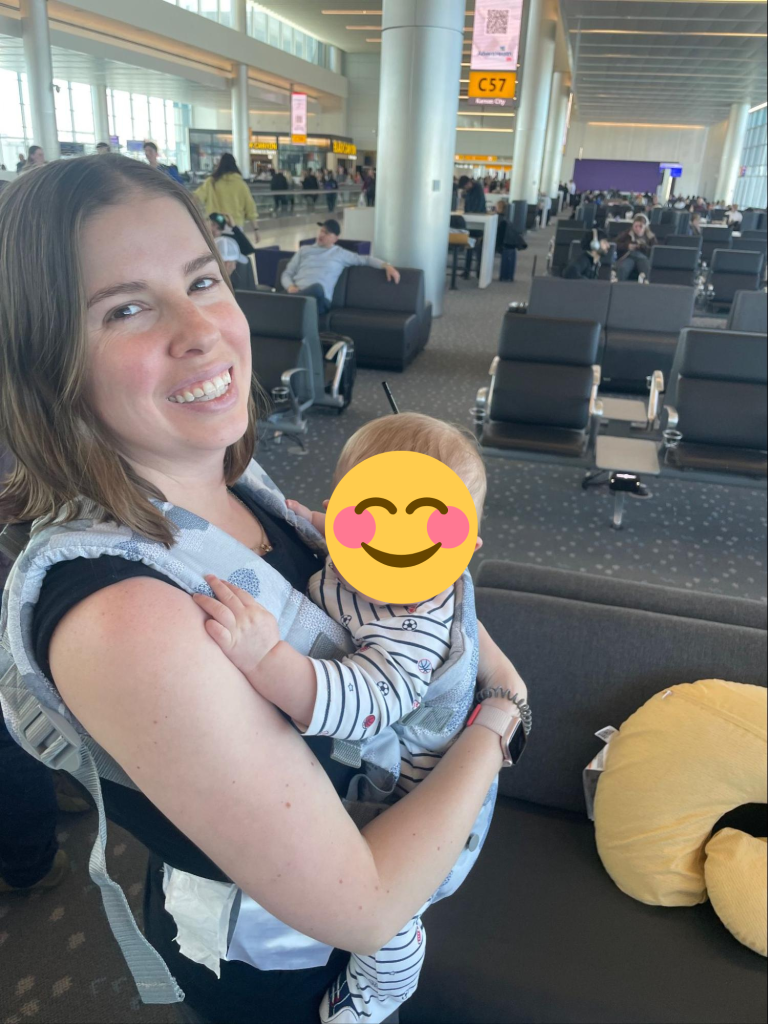
The benefits of walking around with baby in a carrier/wrap at the airport are numerous. It:
- Helps tire out baby for the flight
- Makes it easier to transport baby from terminal to jetway, and
- Gives you a place to put them if you (gate) check your stroller
We always bring our sturdy Infantino baby carrier for this and it’s adjustable for many different stages, from infant to toddler.
Pre-boarding policy
Many airlines offer early boarding at no additional cost to families traveling with young children who need a little extra time. So far, we’ve flown with baby on American Airlines, Southwest, and Aer Lingus and we were able to pre-board with all of them.
It’s definitely a perk (one of the few!) that comes with air travel with infants.
Traveling with a car seat on the plane
There are a few questions to answer before determining if you’ll want to bring baby’s car seat on the plane.
Should I use the bassinet seat?
Some aircraft and flights offer bassinet seats in the bulkhead seats as a bed for baby. Airline bassinets’ availability is subject to many things, so be sure to call your airline to inquire about reserving one.
It’s usefulness to you will ultimately be a factor of your baby’s ability to sleep in it and whether or not they exceed the weight limit.
Should I bring our car seat on the plane with us? Does that count as luggage?
Your infant’s car seat shouldn’t count against your luggage baggage allowance but for budget airlines you may want to double-check their policies so you don’t get caught in any “gotchas”.
I’d only recommend bringing it on the plane if you bought a seat for your infant. Otherwise, if you’re traveling with it, it’s better to check or gate check because it likely won’t fit in overhead baggage on the plane and it’s otherwise bulky to travel around the airport with when you’re not needing to use it until you get to your destination.
Thinking about renting a car seat with your rental car?
You certainly can. It could make sense if you’re not traveling with a car seat and are planning on having your infant sit on your lap.
However, I wouldn’t recommend it if you’re planning to pay for a seat for your infant, as you’d be traveling with a car seat anyway.
Getting through the flight
Congratulations, most of the hard part is behind you — depending on how your baby takes to the flight experience.
Here are some tips and tools to get through a flight with baby:
Take-off and landing with a baby
For most babies, takeoff and landing is when they’re likely to be the most bothered. My baby is somewhat of an anomaly and so far hasn’t acted bothered in these situations.
But if your baby is different than mine, you could plan to have several or all of the following on hand:
- Favorite pacifier: My baby loved Philips Avent pacifiers.
- Teethers: Like these Gerber crackers and toys like this teether turtle.
- Baby earmuffs: For noise protection and help adjusting to air pressure changes.
Until you actually take that first flight, it’s hard to know exactly what to expect. So it helps to be prepared with several options.
Once you figure out what works for your baby, you can pare down and pack lighter on your next trip.
Changing diapers on a plane
My husband is 6’5”, and on some aircraft, changing our child in a tiny airplane bathroom is just not a realistic expectation.
It’s a necessary evil and you need to be ready for the possibility that you not only have to change baby’s diaper, but potentially also have to deal with a blowout that culminates in an outfit change for baby and the attending parent.
Yes, I’m weighing in from experience.
To help prevent blowouts, we always change our baby into an overnight diaper before getting on the plane. You may also want to have a wet bag for anything that gets dirty.
In general, pack plenty of diapers and extra wipes—way more than you think you’ll need. In fact, you should probably just leave a pack of wipes handy throughout the flight in the seat back pocket.
How to dress baby on the plane
You probably want to prioritize clothes for baby that make diaper or outfit changes as easy as possible. I love Little Sleepies footie pajamas for this because the bamboo fabric is good for just about any temperature and you can easily cover baby’s hands and feet when necessary.
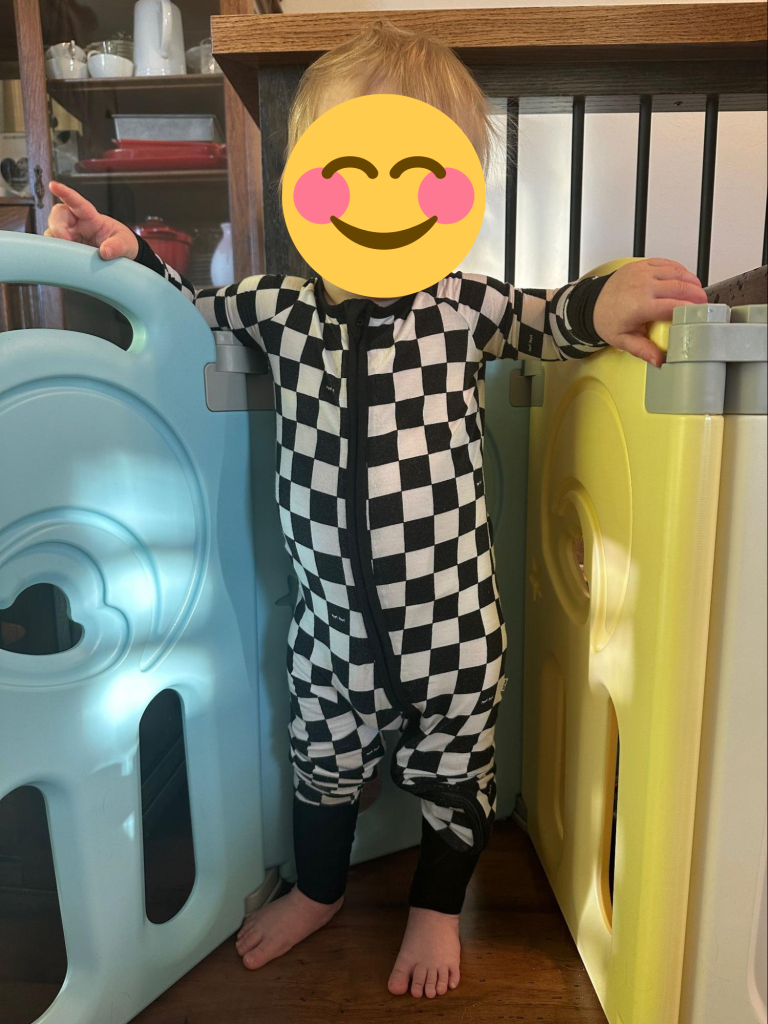
They’re non-bulky, so you can maximize space when packing extra pairs in your diaper bag in case of blowouts.
I haven’t found it necessary to dress baby in layers at the airport but it’s certainly a good idea to have a hoodie or light coat available just in case.
And for when you get to your destination, pack some funny baby onesies and family matching styles from the Streamlined and Styled shop.

Feeding baby on the plane
As with anything else, feeding baby on a plane is certainly more challenging than when you have more space and the structure of a high chair.
If your baby is eating solids, traveling via airplane may be a time when you over-rely on pouches, teethers, and cereal/puffs. It will be difficult (and messy) to do anything much more complicated than that.
I recommend bringing a silicone bib that’s easy to wipe down and reuse. When you’re feeding solids on the go, it provides the least messy mechanism for baby to feed himself — we set food in the bib, and he picks it up and eats it.
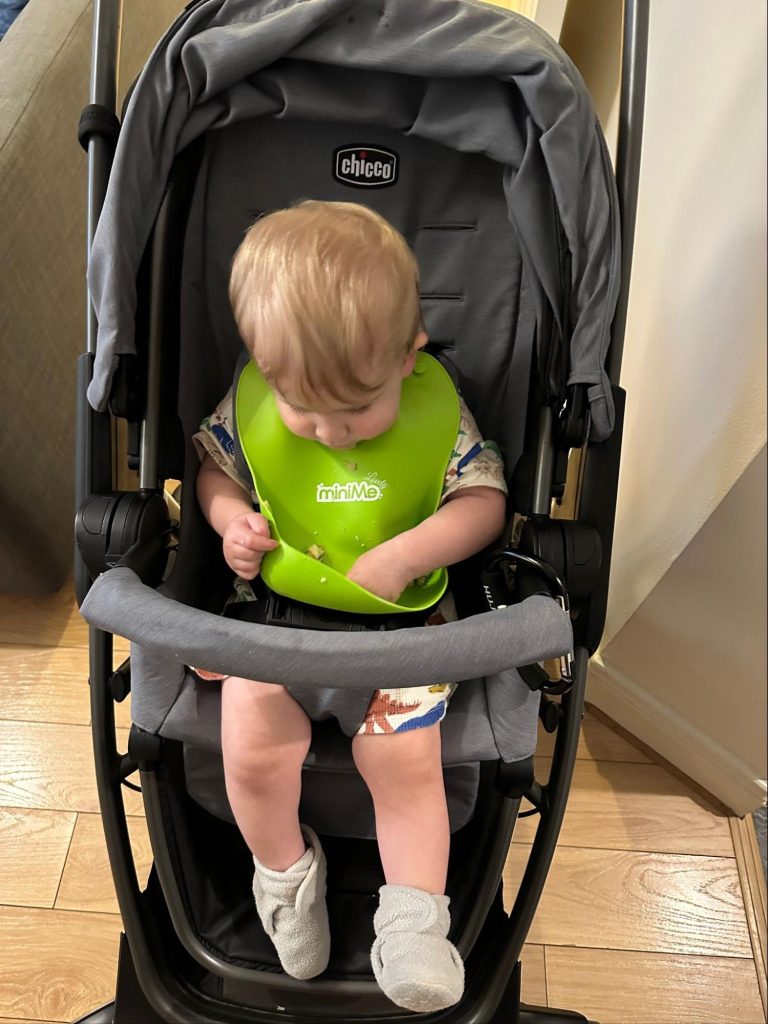
For bottle feeding, I recommend bringing as many bottles as you can reasonably carry on hand.
If your space is limited, we’ve used these breast pump wipes as a way to clean used baby bottles for reuse. It’s a “good enough” situation for getting through travel — especially when dealing with the unexpected, like a delay.
Getting baby to sleep on the plane
My best advice is not to count on it happening.
For each leg of our international flight with our almost one-year-old, he may have slept two hours of the nine we were in the air. It was absolutely brutal but it also tired him out enough that the adjustment to local timezones was practically seamless.
That being said, having a dedicated baby seat was probably the only reason he got any sleep on that flight. During our travels on shorter domestic flights, when baby was younger, he managed to sleep well on his parents.
TL:DR; I have no consistent trick that will work here besides stacking the deck in your favor for longer flights with a dedicated seat and anything else known to soothe your baby.
Should you bring a white noise machine? It really depends on whether or not it bothers your fellow passengers, as Kaley Cuoco found out the hard way when flying with her baby. You can bring one (we use this one while traveling and the Hatch at home) but don’t rely on being able to use it.
Travel with baby: gear
Truthfully, you don’t need a lot of baby travel items that you only use while traveling. But you’ll want to pack the diaper bag you carry on carefully to be as useful as possible while you’re thrown into the chaos of traveling with a baby.
But I do have a few travel-specific baby product recommendations to share (repeating some product recommendations shared earlier):
- Travel Boppy: For giving bottles or as a nursing pillow during air travel.
Relatedly, this is a nursing cover I used effectively while traveling.
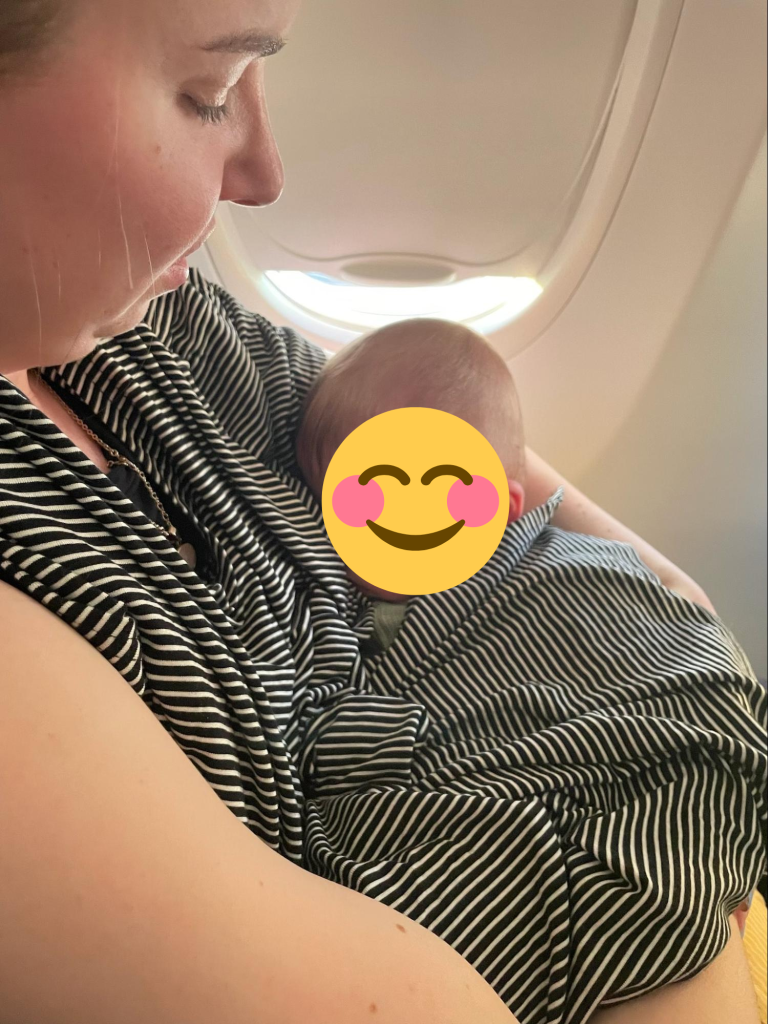
If you’re breastfeeding, I recommend reserving the window seat for privacy.
- Stroller: If you don’t want to check or gate check your standard stroller option, look for one that collapses to fit in overhead bins like the Bugaboo Butterfly.
- Car seat: Something just comfortable enough that they might sleep in it, like the Maxi Cosi Romi convertible car seat. If you need to move through the airport, use a large carabiner to attach to your stroller. You could also use a car seat mover if you want to check the stroller and want to move your car seat and baby together.
- Good diaper bag: I swear everyone I know has this Ruvalino diaper backpack (including us). It’s affordable with many color options.
Final thoughts: air travel with infant tips — what to expect
Traveling with an infant is not something I want to do particularly often but in my experience, proper planning has made the process tolerable.
My best advice if you haven’t done it yet? Take a deep breath and rip off the bandaid. You’ll be so glad you did. Traveling with a baby isn’t quite a “vacation” but it can still be a lot of fun.
What are your best air travel with infant tips? Sound off in the comments!
Leave a Reply